NASA: The Swan glowing in flight – Lo splendente Cigno in volo

NASA: The Swan glowing in flight - Lo splendente Cigno in volo

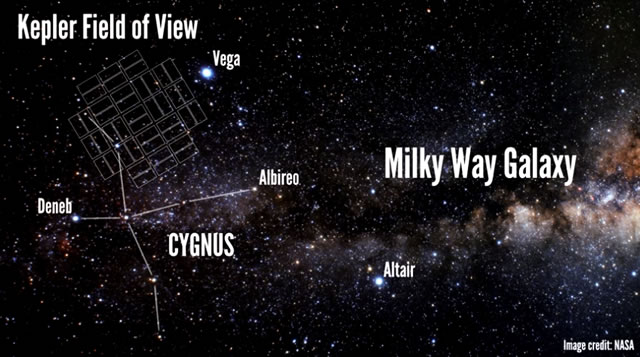
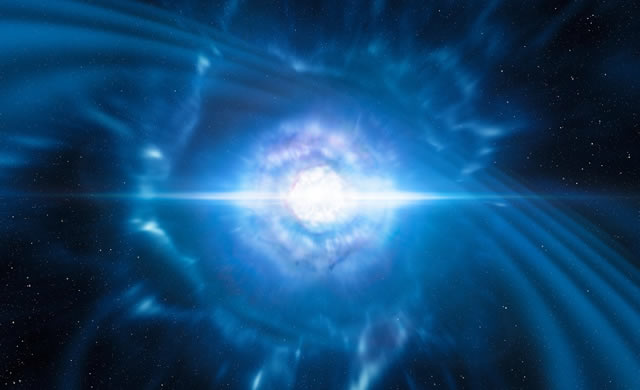
Best known as a swan winging its way across the night, the constellation Cygnus is easily seen in the northern hemisphere’s summertime sky. This new view of the Cygnus-X star-forming region by the Herschel Telescope highlights chaotic networks of dust and gas that point to sites of massive star formation. This image combines far-infrared data acquired at 70 micron (corresponding to the blue channel); 160 micron (corresponding to the green channel); and 250 micron (corresponding to the red channel). The observations were made on May 24, 2010, and Dec. 18, 2010.
Herschel is a European Space Agency cornerstone mission, with science instruments provided by consortia of European institutes and with important participation by NASA.

Image Credit: ESA/PACS/SPIRE/Martin Hennemann & Frederique Motte, Laboratoire AIM Paris-Saclay, CEA/Irfu — CNRS/INSU — Univ. Paris Diderot, France.

Meglio conosciuta come Cigno, con le ali spiegate attraverso la notte, la Costellazione del Cigno è facilmente visibile nel cielo estivo dell’emisfero Nord. Questa nuova immagine di Cygnus X, regione di formazione stellare, ottenuta tramite il telescopio Herschel, mette in evidenza polvere e gas, elementi fondamentali nella formazione di nuove stelle.
Herschel è un Agenzia europea per la missione spaziale, con strumenti scientifici forniti da consorzi di istituti europei e con la partecipazione importante da parte della NASA.
Source/Continue reading → NASA

Share
Posted in Science, Space | Tagged , , , , , , , , , | 1 Comment

New Planet Found in Our Solar System? – C’è un nuovo pianeta nel Sistema Solare?

New Planet Found in Our Solar System? - C'è un nuovo pianeta  nel Sistema Solare?

New Planet Found in Our Solar System?
Odd orbits of remote objects hint at unseen world, new calculations suggest.

Source/Continue reading → news.nationalgeographic.com

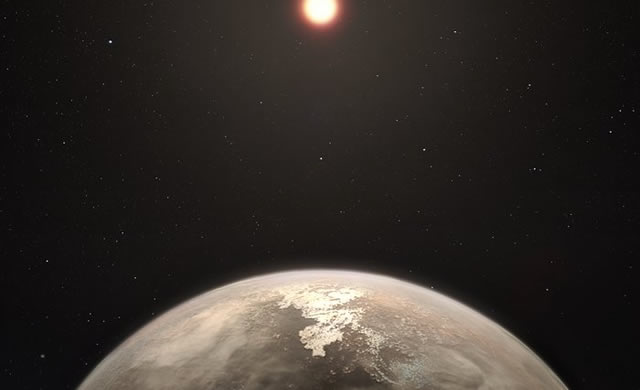
C’è un nuovo pianeta nel Sistema Solare?
Secondo un astronomo, orbiterebbe nella Fascia di Kuiper, oltre Plutone. Ma altri scienziati sono scettici.

Fonte/Leggi tutto → www.nationalgeographic.it

Nell’illustrazione, un piccolo oggetto ghiacciato in orbita al di là di Plutone (archivio). Immagine per gentile concessione G. Bacon, STScI/NASA

Artist’s conception of a small icy object beyond Pluto (file picture). Illustration courtesy G. Bacon, STScI/NASA

Share
Posted in Science, Space | Tagged , , , , | Leave a comment

A unique celestial event – June 5, 2012: Transit of Venus – Evento unico nella nostra vita – 5 Giugno 2012: il transito di Venere

June 5, 2012: Transit of Venus - 5 Giugno 2012: il transito di Venere

On June 5, 2012, a unique celestial event will take place, never to be repeated in our lifetimes. The planet Venus will align itself perfectly between the Earth and the Sun. This rare alignment will allow Venus to be visible as it passes directly across the face of the Sun in an event that astronomers call a transit. The 2012 Transit of Venus will last nearly 7 hours, and it will provide an extraordinary viewing event for observers around the world. Unfortunately, this event is not well positioned for audiences in the continental United States and will only be visible to Georgia viewers for about 2 hours as the Sun sets in the west. An additional limitation in viewing the Sun is the danger posed to the naked eye, therefore special equipment and techniques are required to create a safe observing environment.

Il 5 Giugno 2012 avrà luogo un evento celeste unico, non ripetibile nella vita di ognuno di noi: il Pianeta Venere sarà perfettamente allineato tra la Terra ed il Sole. Questa rara combinazione renderà visibile il Pianeta Venere al suo passaggio direttamente sulla faccia del Sole. Questo evento è chiamato dagli astronomi “Transito”. L’evento non sarà visibile in tutto il mondo, per questo sono già attive diverse piattaforme in rete che permetteranno di seguire lo spettacolo in diretta mondiale. Il display qui su questo blog è già sintonizzato per l’evento. Per chi dovesse trovarsi nei paesi in cui il transito di Venere sarà visibile si raccomanda di munirsi di speciale equipaggiamento tecnico, di non cercare di assistere al fenomeno ad occhio nudo, al fine di preservare la vista.

Continue reading

Share
Posted in Planet Earth, Science, Space | Tagged , , , , , , , , , , , , , | 1 Comment

Conjunction: Mercury, Jupiter and the Pleiades – Congiunzione: Mercurio, Giove e le Pleiadi

Conjunction: Mercury, Jupiter and the Pleiades - Congiunzione: Mercurio, Giove e le Pleiadi

NOON CONJUNCTION: Mercury, Jupiter and the Pleiades are converging for a beautiful three-way conjunction. Unfortunately, it’s happening in broad daylight. The two planets and the star cluster are only a few degrees from the sun. The Solar and Heliospheric Observatory (SOHO) photographed the encounter on May 22nd. SOHO uses a coronagraph to block the glare of the sun, revealing what the human eye cannot see. Later today, Mercury and Jupiter will pass in the noon sky less than 1/3rd a degree apart. Join SOHO for a ringside seat.

Source/Continue reading → www.spaceweather.com

Incontro stellare oggi 22 Maggio 2012, che vede la congiunzione fra Mercurio, Giove e l’ammasso stellare delle sette sorelle: le Pleiadi. Sfortunatamente il bellissimo spettacolo di questo incontro a tre avviene durante le ore diurne, quindi ci affidiamo alle immagini della sonda SOHO (Solar and Heliospheric Observatory) che ne riporta l’evento.

Image/Credit:  sohowww.nascom.nasa.gov

Share
Posted in News, Science, Space | Tagged , , , , , , , , , , , , | Leave a comment

Annular Solar Eclipse live from Mt. Fuji – In diretta le fasi dell’eclissi anulare solare del 20 Maggio 2012

Annular_Solar_Eclipse _Tom_Wagner

Image Credit: Tom Wagner – SpaceWeather.com

Solar eclipse at Tokyo

Continue reading

Share
Posted in Planet Earth, Science, Space | Tagged , , , , , , , , , | Leave a comment

Sea of Stars: Glowing Blue Waves Explained – Un mare di stelle: il fenomeno della bioluminescenza

Sea of Stars: Glowing Blue Waves Explained - Un mare di stelle: il fenomeno della bioluminescenza
Pinpricks of light on the shore seem to mirror stars above in an undated picture taken on Vaadhoo Island in the Maldives.

The biological light, or bioluminescence, in the waves is the product of marine microbes called phytoplankton—and now scientists think they know how some of these life-forms create their brilliant blue glow.

Source/Continue reading → news.nationalgeographic.com

Infinite particelle di luce sulla riva del mare sembrano rispecchiare il cielo stellato, in una foto non datata, reperita a Vaadhoo Island, alle Maldive.

La luce biologica, o bioluminescenza, tra le onde del mare, è il prodotto di microbi marini chiamati fitoplancton, e ora gli scienziati pensano di sapere come alcune di queste forme di vita creano il loro bagliore blu.

Share
Posted in Planet Earth, Science | Tagged , , , , , , , | Leave a comment

A boost for #quantum reality – Fisica quantistica: la funzione d’onda è uno stato reale

A boost for quantum reality - Fisica quantistica: la funzione d'onda è uno stato reale
Theorists claim they can prove that wavefunctions are real states.

The philosophical status of the wavefunction — the entity that determines the probability of different outcomes of measurements on quantum-mechanical particles — would seem to be an unlikely subject for emotional debate. Yet online discussion of a paper claiming to show mathematically that the wavefunction is real has ranged from ardently star-struck to downright vitriolic since the article was first released as a preprint in November 2011.

Source/Continue reading → Nature.com

Un teorema scuote i fondamenti della teoria dei quanti

In un articolo definito “sismico” per il possibile impatto sulla meccanica quantistica, tre ricercatori mostrano che la funzione d’onda – sulla cui interpretazione i fisici discutono dal 1920 – non è uno strumento puramente statistico ma un oggetto fisicamente reale.

Fonte/Leggi tutto → LeScienze.it

Share
Posted in Fisica, Science | Tagged , , , , , | Leave a comment